Head Office: 0800 007 4567

We create places people are proud to call home


The Housing Ombudsman Service introduced a revised Complaint Handling Code in 2024. This report explains how we responded to complaints in line with the Code, what customers told us, and the improvements we have made to provide a better service in 2025/26.
During 2025/26, our main aims were to:
- respond to complaints within the required timescales, improving performance by 38%
- meet all requirements of the Housing Ombudsman Complaint Handling Code from 1 April 2025, which we achieved;
- improve customer satisfaction with complaints handling, which increased by 7%; and
- use learning from complaints more routinely across services and service reviews.
To support these aims, we delivered our improvement action plan. This included:
- using one system across the organisation to improve consistency and efficiency;
- improving reporting and governance so performance is clear, transparent and accountable;
- reducing the number of Housing Ombudsman maladministration findings considerably;
- strengthening oversight through Executive Management Team, Service Performance and Customer Experience Committee and Board reporting; and
- improving how we capture and act on learning from complaints.
Our focus was on making the complaints process clearer, quicker and easier for customers. We completed a review of the complaints service and will move to one clear operating model from Quarter 3 2026/27. Services will manage Stage 1 complaints, while a central team will manage Stage 2 complaints and provide advice, training, reporting and oversight.
A key reason for bringing services together was to improve the experience for tenants and communities. Important improvements included:
- completing a repairs service review and moving towards a same-day service;
- introducing colleague values — ‘own it, improve it and live it’ — to focus on resolution and customers’ perspectives;
- delivering the complaints service improvement plan and service review;
- moving to one ICT system to improve customer processes;
- improving how we deliver major works, including kitchen and bathroom replacements;
- completing an equality, diversity and inclusion assurance review to help tailor services to customers’ needs; and
- reviewing how we deliver aids and adaptations.
We used what customers told us through complaints to:
- make policies and communications clearer;
- run drop-in sessions on electric heaters and energy advice;
- check links between policies and tenancy agreements so issues can be resolved sooner;
- improve contractor management;
- improve information for out-of-hours operatives on oil heating;
- communicate better with customers during complex planned works;
- use land registry records earlier;
- use before-and-after photographs more consistently; and
- improve cleaning checks.
We will keep listening to customers, learning from complaints and making changes that reduce avoidable problems and improve customers’ day-to-day experience.
Chair of Board response
We prioritised improving how HPG handled complaints in 2025/26. This report outlines the improvements made to replying to complaints within timescales and improving customer satisfaction with complaints handling. The Board of HPG are pleased with the progress we have made but are committed to building upon this progress further.
Throughout 2026/27, HPG will build upon this further by improving how quickly we learn from complaints, for example.
Member Responsible for Complaints response
Customers need a complaints process that is fair, accessible and effective. When something goes wrong, HPG must act quickly to put it right, keep customers informed and use what is learned to improve services.
I am pleased that customers are now receiving complaint responses more quickly. I and HPG also recognise that there is more to do. In 2026/27, HPG will focus on resolving complaints earlier, improving how teams share learning, and making sure customers see further improvements in the services they receive.
Governance
In 2025/26, we introduced the Service Performance and Customer Experience Committee (SPaCE). The committee includes residents and Board members and is chaired by the Member Responsible for Complaints. It helps the Board understand customers’ experiences, check that we are meeting consumer standards and make sure customers’ voices help shape our services.
The Member Responsible for Complaints and SPaCE review complaints performance at every meeting. This gives the Board clear oversight, keeps complaints a priority and helps us maintain a positive complaint handling culture. Where we identified areas that did not meet the Complaint Handling Code, we monitored progress closely, so improvements were delivered for customers.
Self-assessment
After we identified areas where we did not meet the Complaint Handling Code, we reviewed our complaints service across the organisation. Our priority was to meet the Code in full and reduce how long customers waited for complaints to be resolved.
After achieving full compliance, we reviewed the service again and agreed the operating model for 2026/27. We are now putting this in place carefully, with a clear focus on maintaining standards and making improvements that customers can see and feel.
To support this, we improved complaints performance, completed customer care training, reduced Housing Ombudsman investigations and reduced our maladministration rate from 71% to 40%, *subject to confirmation in the final Housing Ombudsman report.
Overall performance on responding to complaints within the relevant timescales is detailed below:
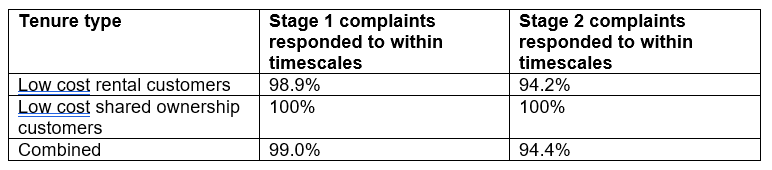
This is a considerable improvement from last year, and we will continue to build on it. In a small number of cases, we did not accept a complaint. This was because:
- we had already responded to the issue through a previous complaint; or
- the issue happened more than 12 months ago, although we always review this on a case-by-case basis.
Stage 1 performance
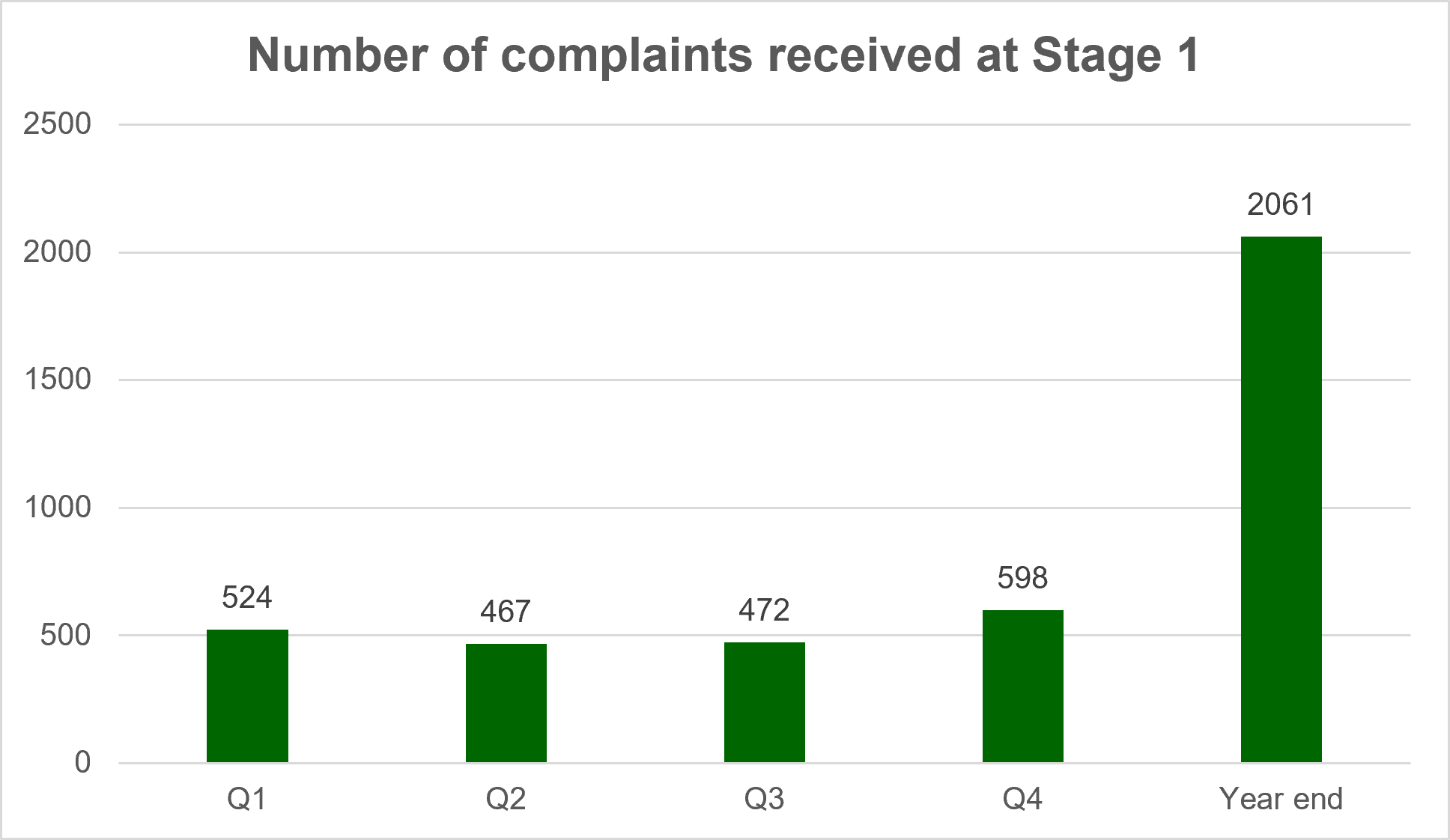
Of the 2,061 complaints we received, the breakdown was:
- 1,896 from customers who rent homes from us;
- 38 complaints from customers who live in low cost home ownership homes such as shared ownership;
- 127 complaints from members of the public or people who live near our homes.
We want it to be easy for customers to raise concerns and feel confident that we will listen and respond. We also want to reduce avoidable complaints by acting on what we learn. Our improvement plan has helped customers receive quicker responses, and satisfaction with complaint handling has increased by 7%. Our Stage 1 performance is now upper quartile compared with other landlords.
Complaint handling improved significantly in 2025/26. We responded to 99.0% of Stage 1 complaints within timescales, a 38% improvement in response performance.
This was achieved through strong cross-team working, regular monitoring and Executive Management Team focus. Customer care training also helped colleagues focus on resolving complaints well, communicating clearly and using complaints as opportunities to learn.
Repairs are one of the services customers use most, so they remain a key priority. Complaints about repairs increased slightly in 2025/26, which shows we still need to improve. This year, we completed a repairs service review, listening to the views of 10,000 customers.
The main reason customers complain is the time it can take to complete work, particularly repairs. Moving repairs into one system and bringing planning teams together has already improved coordination. We know there is more to do, and we are moving to a same-day repairs model to make the service quicker and more reliable for customers.
We know clear and timely communication matters to customers. Improving communication across our services will be a key part of our service reviews in 2026/27.
In 2025/26, we worked with customers to design a new Asset Management Strategy. This is now in place and is helping us deliver major works in a more consistently customer-focused way.
Stage 2 performance
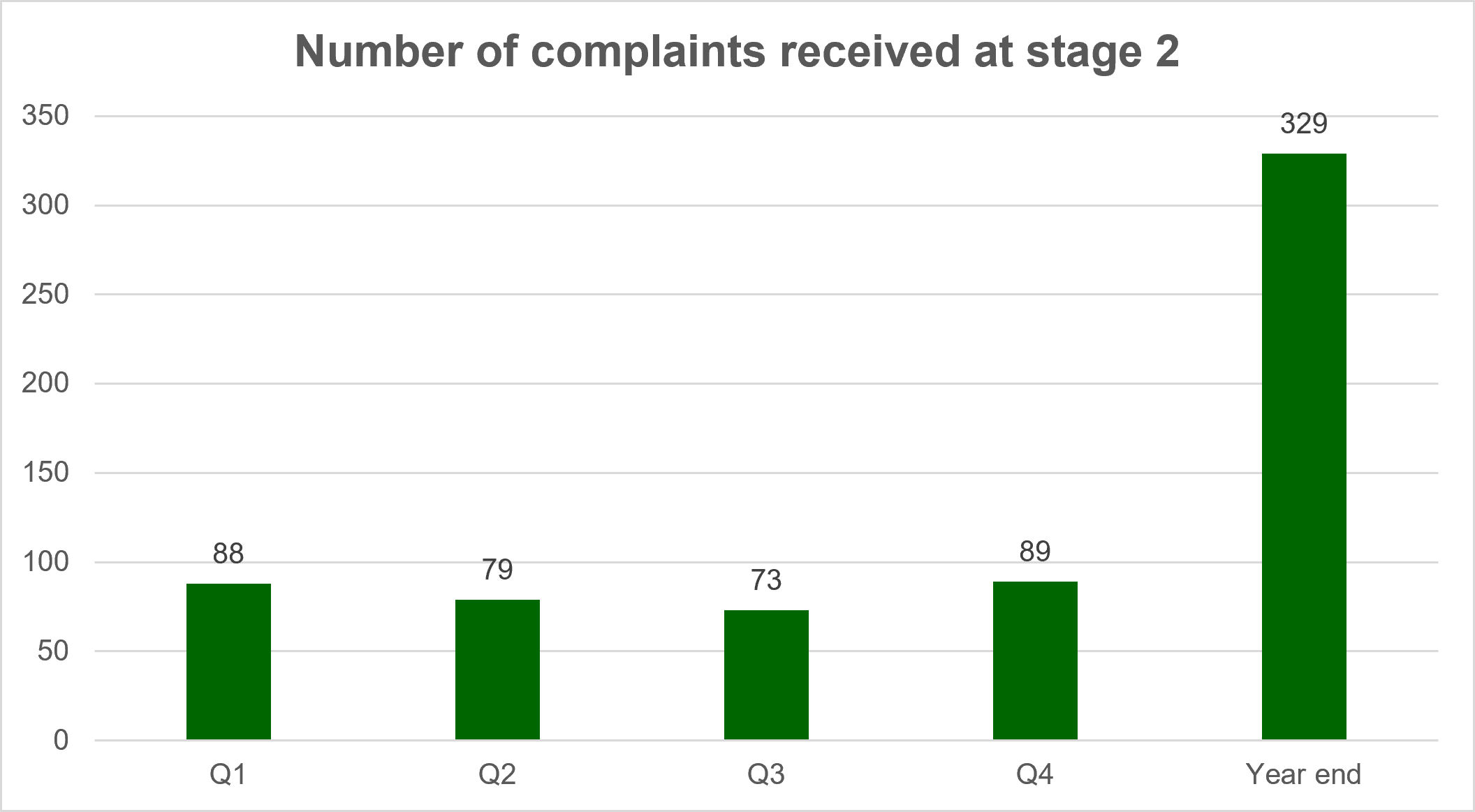
16% of complaints were escalated to Stage 2 of our process. Most of these related to repairs.
Moving to one complaints model across the organisation will mean Stage 2 complaints are handled by a central team. This will help us provide a more consistent, fair and clear experience for customers.
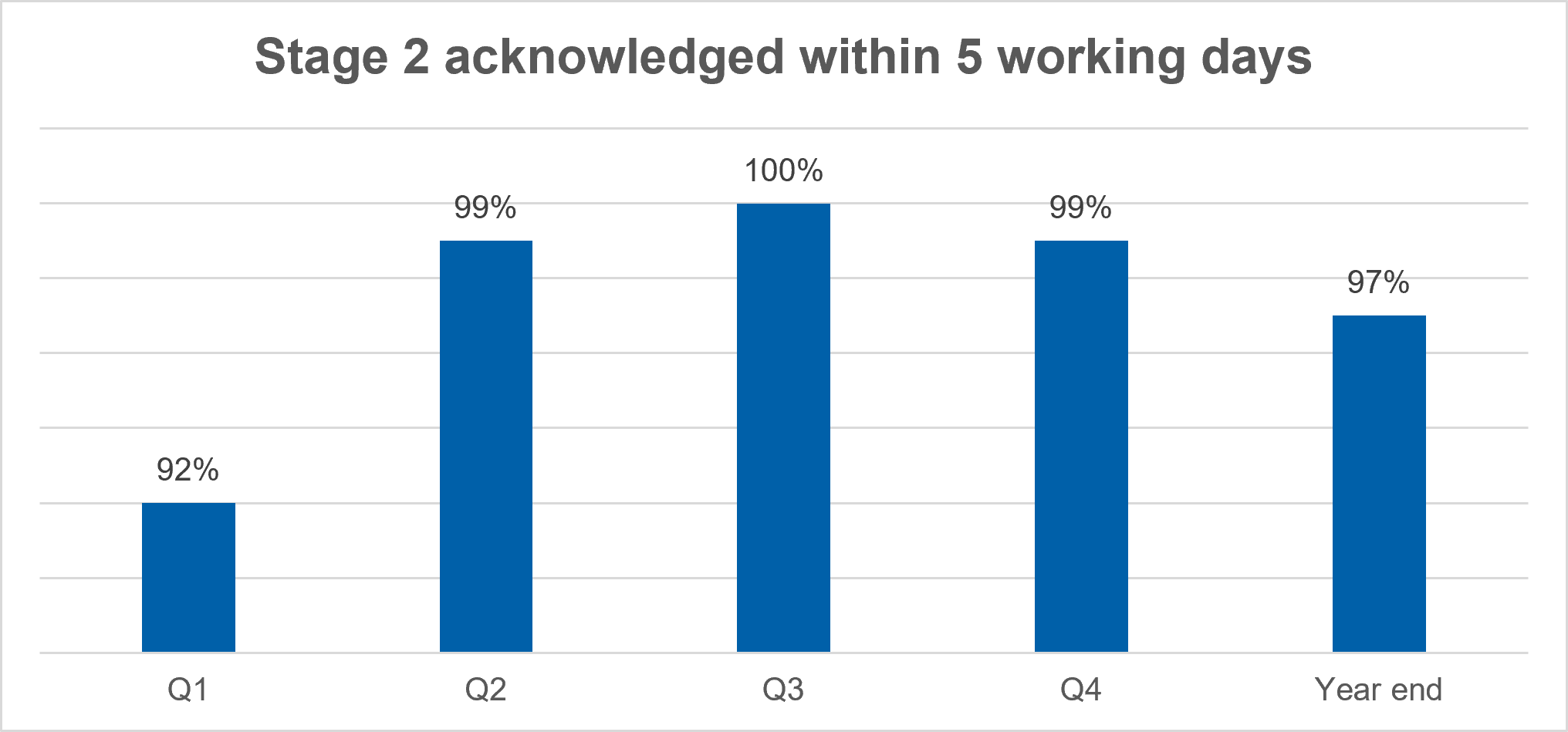
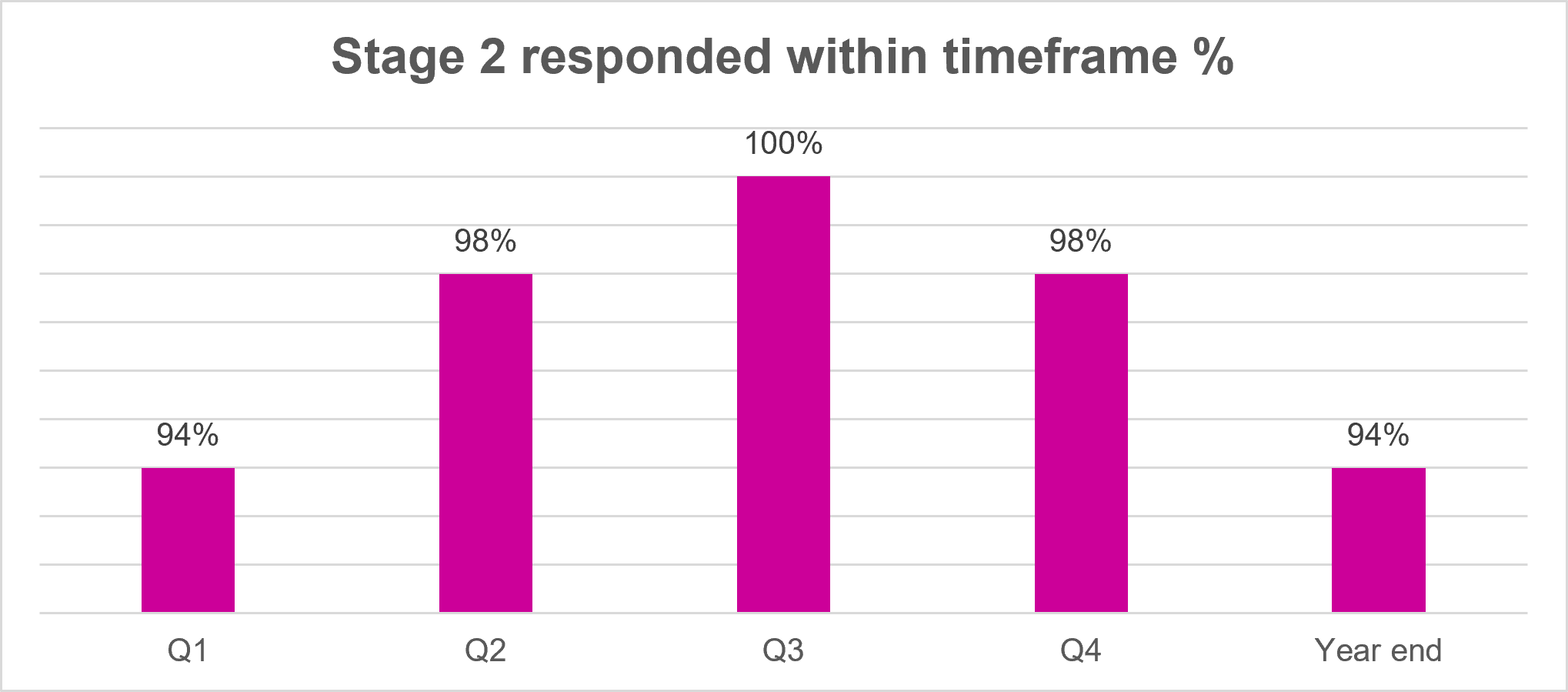
As with Stage 1, we have significantly improved how quickly we respond to Stage 2 complaints. We want to reduce the number of times we need to extend Stage 2 complaints, so customers receive answers sooner.
Housing Ombudsman
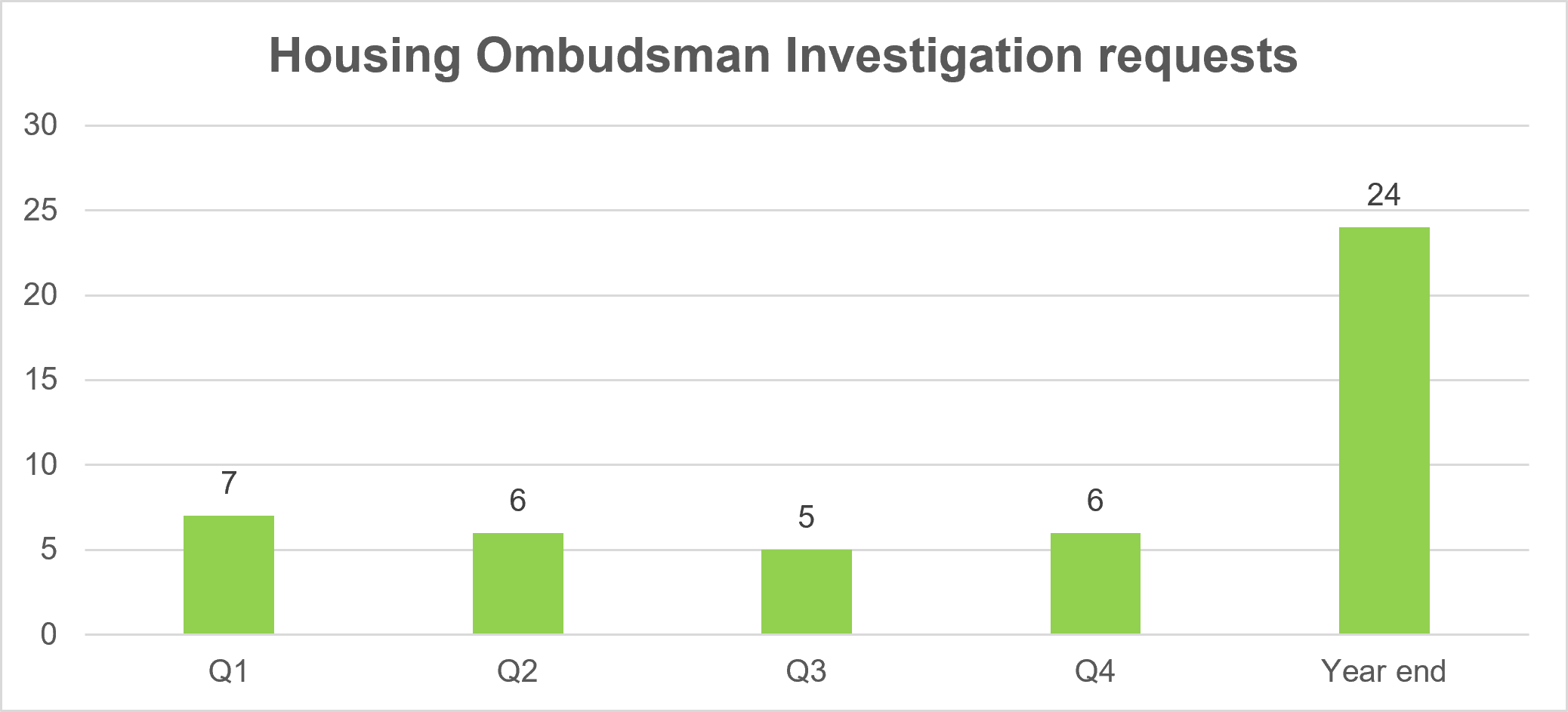
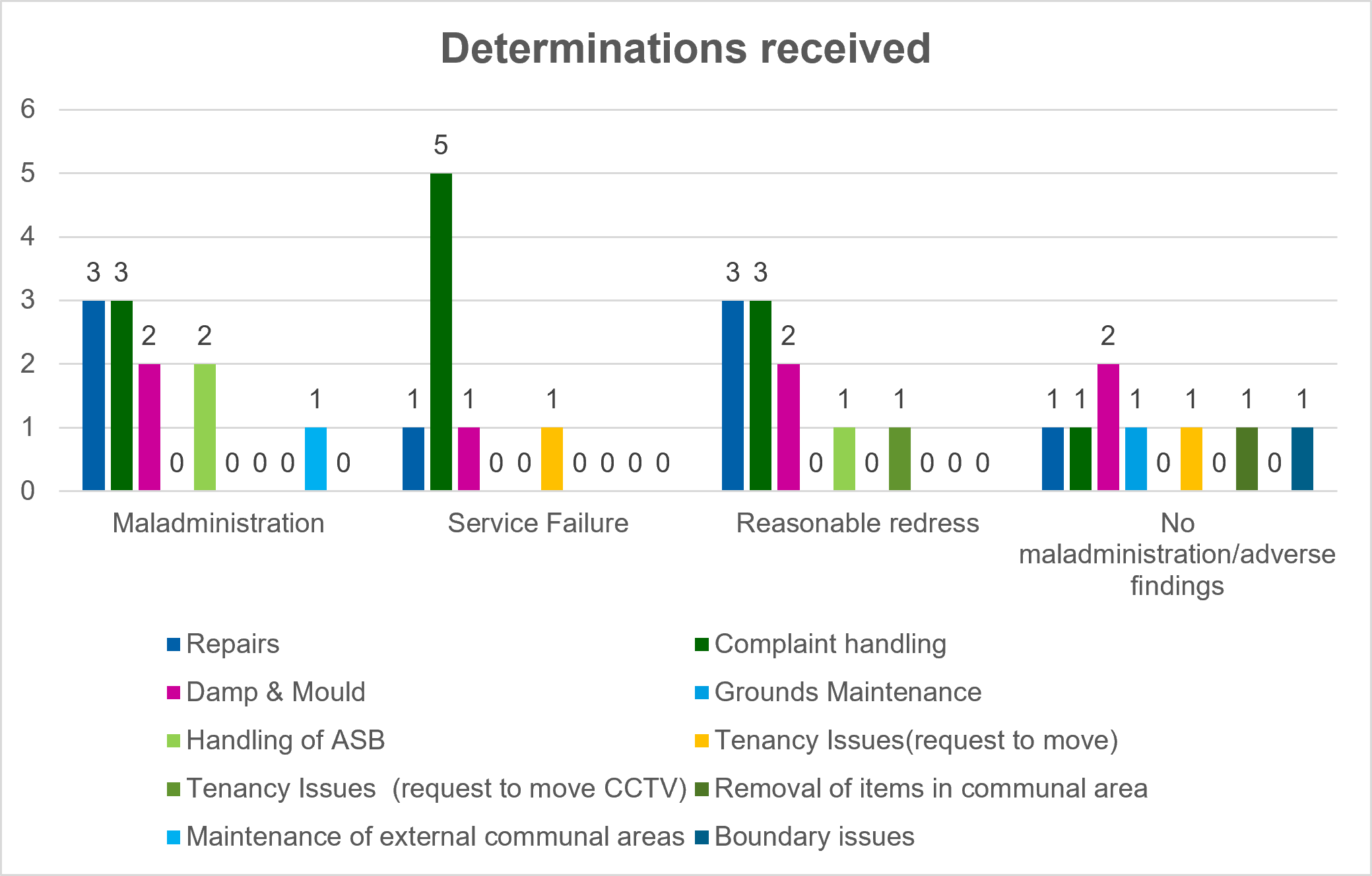
We received 18 determinations in 2025/26, which was fewer than the previous year. We also reduced the maladministration rate from 71% to 40%, *subject to confirmation in the final Housing Ombudsman report.
We have acted on the learning from all determinations and have complied with all orders.
We are pleased to have reduced the number of complaints where maladministration was found. However, we know every complaint is an opportunity to learn. We are using this learning to improve our complaints and repairs services, and it was a key reason for starting a review of how we manage aids and adaptations.
The following areas were highlighted for action by our Housing Ombudsman determinations:
- Complaint handling, timescales and staff training – we have transformed our complaints service this year but know there is more to do. This year we will focus on resolving complaints at the earliest opportunity and keeping our promises more consistently.
- Time taken to complete repairs and repeated contact – we are moving to same-day repairs, building on the improvements already made through one system and better coordination.
- Considering customers’ diverse needs – all colleagues have completed ‘It Starts with Me’ training, which encourages everyone to think about customers’ needs and how we can tailor our services effectively.
- Record keeping – during 2025/26, we moved to one Housing Management System. This is central to improving the accuracy and consistency of our records.
- Communication – training has reinforced why clear communication matters. During 2026/27, we will also review services as part of our ‘Improve it’ value, so we continue to improve how we communicate about services.
- Handling anti-social behaviour – as part of bringing our services together, we identified ways to improve how we handle anti-social behaviour and have acted on them. Moving to regional working will also make it clearer who is responsible for resolving cases and help us work in communities more routinely.
Satisfaction with complaint handling
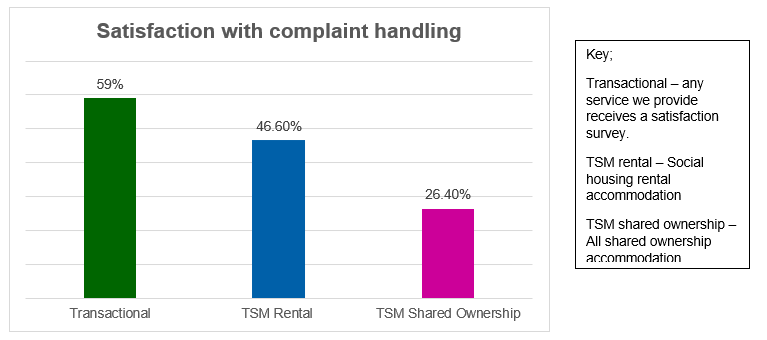
We have made good progress and improved satisfaction with complaint handling by 7%. We know there is more work to do to improve the experience for shared owners. We are proud that our results for rental homes are upper quartile compared with other landlords, and we will work to achieve the same level of performance for shared owners by responding more quickly and effectively when they contact us about enquiries or services.
Service improvements – learning from complaints
Our Service Performance and Customer Experience Committee regularly reviews complaints performance and the main themes from customer feedback. Throughout the year, the main learning points have been:
- processes not being followed;
- earlier resolution;
- conduct of staff and contractors; and
- communication, particularly about next steps.
We are bringing our services together, so they work more consistently across the organisation. This includes moving to regional teams in North, Central, South and West areas. This will help customers get answers sooner, improve communication and make it clearer who is responsible for each service. We are also introducing a new service review approach, linked to our ‘Improve it’ value, so we can use learning from complaints to strengthen processes and improve customers’ experience.
We are pleased with the progress made in 2025/26 on complaints performance and learning from complaints. We know there is more to do, and in 2026/27 we will:
- move to one complaints model across the organisation;
- focus on resolving complaints at the earliest opportunity wherever possible;
- discuss learning from complaints within our regions, so we identify patterns across services earlier; and
- build complaints learning and customer feedback into our new service review approach.