Head Office: 0800 007 4567
We create places people are proud to call home


Accessability
We have provided an accessible version of our PDF below. If you need to use accessability tools, for example a screen-reader, speech-to-text or translate into another language, please click on the “speak” icon at the top right-hand side of the page to open the ReachDeck Accessability Toolbar.

Asset Management Strategy 2026-2031
Executive Summary
This Asset Management Strategy sets out how Housing Plus Group will invest in, manage, and renew its homes between 2026 and 2031 to deliver on its mission of creating places people are proud to call home for current and future residents.
Grounded in a data-led and resident-informed approach, the strategy supports the Group’s long-term business plan, merger commitments, and ambition to be the partner of choice across Staffordshire, Shropshire, and Telford & Wrekin.
Our four merger commitments are to:
- Be a place-based leader
- Do more for customers and communities
- Build business capacity and resilience
- Create a great place to work
Delivery of these commitments is through the strategy defined in the three objectives outlined below.
Asset management strategic objectives
- Safe, sustainable and affordable homes
• Every home meets high safety and quality standards and is affordable to run.
• 100% building compliance and a clear pathway to carbon neutrality by 2050.
• Upper-quartile customer satisfaction with repairs delivery and the quality of homes. - Smarter asset decisions
• Invest in the homes we want to retain and regenerate, and dispose of those that are no longer fit for purpose, guided by value, performance, and local need from both existing and future customers. - Empowered residents and workforce
• Residents help shape where we invest and how communities are improved.
• A united, capable workforce delivering the sustainable homes and services of the future.
Key delivery commitments
- All homes below EPC band C by 2028.
- Build up to 1,000 new homes per year, replacing older stock and meeting identified local needs (as set out in the development and treasury strategy).
- Grow our total stock numbers from 34,000 to approximately 36,000 homes by end of 2031 (Est. 3,500 built, 1,450 sold or redeveloped).
- Maintain a financially sustainable asset base using CADRE-led profiling and NPV+ analytics.
- Align with new regulatory requirements, including the Social Housing Regulation Act and Building Safety Act, including readiness for the new Decent Homes Standard.
Investment and financial resilience
- Investment priorities are underpinned by a 30-year business plan, supported by regular five years stock surveys on all homes, communal areas and commercial assets.
- All decisions are guided by asset performance, safety compliance, and local housing demand.
- Our disposal and development pipeline supports both financial viability and social impact.
Why this strategy matters
This strategy enables Housing Plus Group to respond proactively to regulatory reform, energy efficiency targets, and resident expectations. It ensures ongoing compliance, prudent financial stewardship, and resilience in a rapidly evolving housing sector.
1. Purpose and customer commitment
The Asset Management Strategy 2026–2031 aims to create places people are proud to call home by committing to:
- Keeping residents safe, warm, and proud of their homes.
- Prioritising value for money through targeted investment.
- Leading the way on sustainability and regulatory compliance.
- Involving customers in every decision that affects their home and communities.
- Building and empowering the workforce that will deliver the homes and services of the future.
2. Strategic objectives
| Strategic objectives | What success looks like |
|---|---|
| Safe, sustainable and affordable homes |
|
| Smarter asset decisions |
|
| Empowered residents and workforce |
|
3. Operating context
Housing Plus Group own 34,000 homes and operate primarily across three key local authority areas: Staffordshire, Shropshire, and Telford & Wrekin.
We also manage a small number of homes in neighbouring areas such as Wolverhampton and Lichfield.
Over the next five years, our growth will continue to focus on these three core areas, with only incremental expansion into surrounding regions where the right opportunities arise — provided such growth does not increase our operating costs.
Most of the homes are general needs social and affordable housing, including accommodation for older people. The majority consist of one, two, and three-bedroom homes, with a small number of bedsits and four-bedroom properties. Four high-rise blocks of flats are subject to the Building Safety Act.
Table 1: Breakdown of stock type by Local Authority/Council (April 2025)
| Stock type | Cannock Chase | Dudley | Lichfield | Newcasle-under-Lyme | Shropshire | South Staffordshire | Stafford | Staffordshire Moorlands | Stoke-on-Trent | Telford and Wrekin | Wolverhampton | Total |
|---|---|---|---|---|---|---|---|---|---|---|---|---|
| General Needs | 137 | 0 | 10 | 34 | 5,116 | 4,662 | 5,510 | 0 | 0 | 6,712 | 0 | 22,181 |
| Supported Housing | 80 | 0 | 0 | 0 | 0 | 128 | 42 | 0 | 8 | 62 | 0 | 320 |
| Housing for Older People | 0 | 0 | 0 | 0 | 624 | 502 | 727 | 0 | 0 | 1,268 | 0 | 3,131 |
| Intermediate | 17 | 0 | 4 | 8 | 421 | 38 | 26 | 0 | 0 | 531 | 83 | 1,128 |
| Affordable Rent General Needs |
193 | 0 | 0 | 0 | 1,047 | 58 | 602 | 62 | 0 | 1,325 | 58 | 3,345 |
| Affordable Rent (Supported/Older People) |
63 | 0 | 0 | 65 | 426 | 130 | 169 | 11 | 0 | 251 | 0 | 1,115 |
| Market Rented | 0 | 0 | 0 | 0 | 41 | 0 | 0 | 0 | 0 | 194 | 0 | 235 |
| Shared Ownership | 59 | 3 | 7 | 1 | 393 | 320 | 291 | 0 | 0 | 207 | 7 | 1,288 |
| Leasehold | 4 | 1 | 0 | 0 | 218 | 245 | 231 | 0 | 0 | 540 | 0 | 1,239 |
| Choices – Care Home | 0 | 0 | 0 | 11 | 0 | 0 | 4 | 0 | 22 | 0 | 0 | 37 |
| Choices – Supported Housing |
0 | 0 | 0 | 8 | 0 | 0 | 8 | 0 | 3 | 0 | 0 | 19 |
| Total | 553 | 4 | 21 | 127 | 8,286 | 6,083 | 7,610 | 73 | 33 | 11,090 | 148 | 34,028 |
Table 2: Stock type and size (April 2025)
| Stock type | Rooms | 0 | 1 | 2 | 3 | 4 | 5 | 6+ | Total |
|---|---|---|---|---|---|---|---|---|---|
| General Needs | 0 | 54 | 4,022 | 8,552 | 8,888 | 622 | 39 | 4 | 22,181 |
| Supported Housing | 0 | 11 | 146 | 163 | 0 | 0 | 0 | 0 | 320 |
| Housing for Older People | 0 | 186 | 2,127 | 781 | 26 | 1 | 0 | 0 | 3,121 |
| Intermediate | 0 | 0 | 108 | 645 | 355 | 20 | 0 | 0 | 1,128 |
| Affordable Rent General Needs | 0 | 0 | 404 | 1,874 | 999 | 67 | 1 | 0 | 3,345 |
| Affordable Rent Supported Housing/ Housing for Older People |
0 | 0 | 469 | 646 | 0 | 0 | 0 | 0 | 1,115 |
| Market Rented | 0 | 0 | 42 | 150 | 41 | 2 | 0 | 0 | 235 |
| Shared Ownership | 0 | 1 | 38 | 794 | 448 | 7 | 0 | 0 | 235 |
| Leasehold | 0 | 264 | 241 | 682 | 49 | 3 | 0 | 0 | 1239 |
| Choices – Care Home | 37 | 0 | 0 | 0 | 0 | 0 | 0 | 0 | 37 |
| Choices – Supported Housing | 19 | 0 | 0 | 0 | 0 | 0 | 0 | 0 | 19 |
| Total | 56 | 516 | 7,597 | 14,287 | 10,806 | 722 | 40 | 4 | 34,028 |
| Type | Stock count |
|---|---|
| Bedsit | 201 |
| Bungalow | 5,839 |
| Flat | 10,151 |
| House | 17,513 |
| Maison | 227 |
| Room | 3 |
| Studio Apartment | 38 |
Overall, the energy efficiency of the homes is good, with 85% rated EPC bands A to C. Homes rated D or below are typically of older construction with older and/or off mains gas heating. The group aims to ensure all homes are at least band C by 2028, through a mixture of investment and disposal of expensive to heat homes.
Table 3: Group stock EPC rating (April 2025)
| EPC rating | Total owned units | Group % |
|---|---|---|
| A | 353 | 1% |
| B | 5,371 | 17% |
| C | 20,982 | 67% |
| D | 4,259 | 14% |
| E | 185 | 1% |
| F | 28 | 0.1% |
| G | 2 | 0.01% |
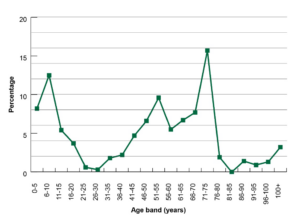
The age of the housing stock is a key factor influencing investment needs within the 30-year plan, with the average age of our homes 47 years. Older homes often require larger upgrades like rewiring, roof renewals or whole house retrofit, and the Group is committed to increasing investment in these areas for well-performing properties.
Poorer-performing homes are being replaced through the new home development programme. All proceeds from property sales are reinvested into new homes within our operating areas via the Asset Renewal Programme — selling approximately 290 homes per year and aiming to replace them with up to 3,500 new homes over the next five years.
The age profile of our stock is detailed in table 4.
Table 4: Percentage of stock by age band (April 2025)
4. External drivers
This strategy responds to a dynamic external environment, including:
Awaab’s Law (part of the Social Housing Regulation Act)
We are accelerating the use of condition-based inspections and digital reporting tools to enable early intervention and ensure full compliance, supported by a responsive repairs service that meets both legislative requirements and customer expectations.
Consumer standards and Tenant Satisfaction Measures (TSMs)
We are aligning investment plans and services to achieve upper-quartile TSM performance, with a focus on repair satisfaction, home condition, safety, and tenant feedback.
Building Safety Act (2022)
We are expanding safety case requirements for higher-risk buildings and new resident engagement duties, beyond the high-rise accommodation.
Future homes and building standards (2025)
All new homes will meet the Future Homes Standard, while gas heating in existing homes will be phased out and customer-friendly retrofit technology installed to cut future costs and bills.
Heat networks regulation 2025
Heat network regulations ensure the Group, as suppliers of communal or district heating systems, monitor and bill energy use fairly and transparently, with added consumer
regulation.
Net Zero 2050
We require all homes to achieve an EPC band C rating by 2028, ahead of the government target and the fossil fuel phase-out. Work will begin with existing homes from 2026, prioritising those using solid fuel, oil, or LPG.
Decent Homes Standard v2
We aim to extend compliance beyond individual component lifecycles to cover communal areas, energy efficiency, and neighbourhood quality, using the new Housing Plus Homes Standard developed with residents.
Ageing housing stock profile
We will strengthen NPV-led evaluation and reinvestment planning to protect long-term financial resilience, reducing the proportion of ageing stock.
Demand for new homes
Our growth will support the rising demand for social and affordable rented and shared ownership homes, meeting the needs of both our customers and households identified by local authorities as being in housing need.
5. Key challenges and opportunities
- Significant investment on £353m is required to meet Net Zero targets and retrofit homes, which is in the business plan, but restricts what we can do to existing aging stock and neighbourhoods.
- Increased resident expectations and regulation will place more emphasis on transparency and tenant voice.
- Workforce development and digital tools will be critical to delivering services efficiently and compliantly.
- Disposal of uneconomic or non-viable homes will remain essential to release financial capacity, allowing reinvestment into new homes. Plus, reducing the investment needs of older investment heavy homes.
- The growth opportunities of land and development schemes is limited to local plan aspirations, but there is an opportunity to be the developer of choice for Staffordshire, Shropshire and Telford and Wrekin.
6. Investment principles and priorities
We will prioritise:
- Safety first: 100% compliance with all safety requirements.
- Sustainable homes: All homes to meet EPC band C or better by 2028* (impending Mees Regulations and the way EPC are calculated may change this measure).
- Smarter spending: Data-led asset decisions using CADRE, NPV+ modelling (including SAP, locality, and safety).
- Customer voice: Area-based pledges co-designed with resident’s neighbourhood investments, only when these have been further developed, costed and approved by the Board.
- Condition-based investment: five-yearly stock condition surveys and explore group wide condition-based replacement approach to ensure components are not replaced ahead of time unless in poor condition, but when required in a timely way. In preparation of the new Decent Homes Standard.
- New homes: Sale of around 290 older existing homes per year, to invest in up to 1,000 new homes per year based on our existing customer and local housing demand. Only consider selling more if it demonstrably creates capacity to build more homes.
Investment in existing homes of the next five years is expected to be nearly £270m, broken down as follows. With an additional 5% included to assist with legislative changes expected during the term of the strategy.
Table 5: Investment in existing homes
| Capital | 2026/27 | 2027/28 | 2028/29 | 2029/30 | 2030/31 |
|---|---|---|---|---|---|
| Planned Programme | 38,533 | 45,717 | 39,981 | 41,171 | 28,955 |
| 5% Increase | 1,927 | 2,286 | 2,232 | 2,292 | 2,150 |
| EPC & NZC Spend | 4,662 | 4,662 | 14,012 | ||
| Total capital | 40,460 | 48,003 | 46,875 | 48,125 | 45,117 |
| Revenue | 2026/27 | 2027/28 | 2028/29 | 2029/30 | 2030/31 |
|---|---|---|---|---|---|
| Non-staff spend HPG | 5,070 | 4,700 | 2,680 | 2,180 | 2,180 |
| Non-staff spend WHG | 4,424 | 4,424 | 4,424 | 4,424 | 4,424 |
| Total revenue | 9,494 | 9,124 | 7,104 | 6,604 | 6,604 |
| Grand total | 49,954 | 57,127 | 53,979 | 54,729 | 51,721 |
| Grants | 2026/27 | 2027/28 | 2028/29 | 2029/30 | 2030/31 |
|---|---|---|---|---|---|
| DESNZ Grant – revenue | (790) | (769) | |||
| DSNZ Grant – capital | (3,537) | (3,439) | |||
| Total grant | (4,327) | (4,208) | 0 | 0 | 0 |
7. Asset profiling and NPV framework
We will continue to evolve our asset appraisal model by embedding:
- Net Zero cost impacts and carbon metrics.
- Local housing need and social value.
- Safety compliance data.
- Voids and management cost trends.
- Resident feedback on quality and affordability.
8. Net Zero roadmap
Over the next 12 months the Group will write a new Group Net Zero delivery plan. With the key deliverables being aligned to this roadmap.
Net Zero roadmap (2025–2050)
| Milestone | Targets | Key Actions |
|---|---|---|
| 2026-27 | Net Zero cost modelling and planning embedded | Combine all energy data into a single SAP modelling software, and incorporate carbon cost metrics into NPV+ model; begin replacement of fossil fuel heating in off-gas homes. |
| 2026-27 | Acceleration of EPC upgrades | Deliver EPC and retrofit assessments; prioritise SHDF and ECO3 funded retrofits; refresh SAP data modelling. |
| 2028 | All homes EPC band C or above | Target deep retrofit of band D or below homes; scale up retrofit delivery using condition-based triggers, with sales of homes if expensive to retrofit. |
| 2030-40 | Phased transition from gas to low-carbon systems | Roll out low-carbon heating solutions (e.g. ASHPs, PV + battery) in all suitable homes; increase EV infrastructure. |
| 2040-50 | Achieve Net Zero Carbon for all homes and operations | Integrate sustainable technologies into all retrofit and new build; reach zero fossil fuel use; complete carbon neutrality of corporate activities. |
9. Housing demand
Our housing demand will be led by our Group lettings knowledge and our existing customers future needs and aspirations, based on customer demand and intelligence, supported by what can be gained from local authority needs analysis.
By enabling our customers to move to a more appropriate property we want to unlock homes for wider use and strengthen long-term customer sustainability. The Group has already identified 700 residents that require a move to a more suitable property, and we will be actively working with these residents.
Indicative demand from local authority data suggests the following in our key operating areas:
Shropshire (county area excluding Telford & Wrekin)
- Draft Housing Strategy 2025-2030 projected a 33.2% increase in residents aged 65-79 by 2043, suggesting greater demand for accessible and age-appropriate housing.
- Broader household projections showed an increase from 122,800 households (2006) to 152,300 by 2026. With further growth of over 3,600 in the next five years.
- Summary: Shropshire is experiencing significant growth in households and older-age residents, driving demand especially for adapted housing and social care-aligned assets. Needing over 3,600 affordable homes over the next five years.
Telford & Wrekin
- 2023 Local Plan Technical Paper outlines two scenarios:
1) Justified alternative recommends 930 dwellings/year, including affordability, employment, and demographic needs.
2) A scenario based solely on demographic trends indicates 1,010 dwellings/year. - Summary: Telford & Wrekin requires over 1,200 new affordable homes over the next five years to meet its demographic and economic growth.
Staffordshire (county-wide and districts)
- Stafford Borough Local Plan sets the housing and employment land requirement for 2020 2040. Specific annual projections aren’t detailed, but would estimate approx. up to 400/500 units/year.
- Staffordshire Moorlands (to 2031) anticipates between 235 and 330 homes per year, including an affordable housing need of 224-432 units/year.
- South Staffordshire District (to 2040) plans for 241 dwellings/year, allocating ~30% as affordable (~67 homes/year).
- Administrative changes are underway (2025 proposals for unitary authorities), which may affect future planning frameworks.
- Summary: Across our operational Staffordshire districts, housing need estimates are up to around 3,300 new affordable homes over the next five years.
Indicative 10-year projection table:
To achieve our aspirational goal of delivering up to 1,000 homes per year (3,500 over five years), we must position ourselves as the social housing partner/developer of choice for sites within our operational area.
10. Strategic housing needs alignment (2026–2031)
We will look to align housing stock renewal and retrofit priorities with projected local needs and strategic business targets for Staffordshire, Shropshire, and Telford & Wrekin, but will need to be flexible with annual build targets within ranges to meet emerging demand trends or economic conditions. We will also be open to stock transfer and acquisition opportunities in our operating area.
Annual net gain summary at the peak of the programme
- Total new homes built over the five years: 3,500
- Homes sold over the five years (strategic disposals): 1,450
- Net Gain: 2,050 units
Retrofit and stock renewal priorities
Existing stock retrofit goals (aligned to local needs):
- Older people and accessible homes: Priority for investment in accessibility adaptations, digital health tech, and energy retrofits (SAP C+ target), linking to the new Care Strategy.
- General family stock: Priority for energy retrofit to achieve Net Zero targets by 2050, phased disposal of older, costly-to-maintain stock (EPC band D or below).
- Affordable homes: Energy efficiency retrofits to ensure affordability, reduce tenant fuel poverty (target EPC band C or above by 2028).
Strategic alignment with asset management
Older person’s housing and accessibility:
- Targeted disposal of unsuitable older housing stock to fund new purpose-built retirement living.
- Programme of retrofit adaptations and energy upgrades to maintain independent living standards and reduce long-term care costs.
Family and affordable homes:
- Disposal of inefficient or poorly performing family homes to fund higher-quality, energy efficient replacements.
- New builds to include Future Homes Standard compliance, reducing long-term maintenance costs and tenant energy bills.
Specialist and supported housing:
- Targeted investment in high-demand supported living schemes; align closely with local authority social care commissioning to ensure long-term occupancy.
- Retrofit existing supported units to improve compliance with Building Safety Act and ensure sustainability.
- Disposal of uneconomic specialist schemes, decommissions in collaboration with tenants and key stakeholders.
Market rent/Shared ownership:
- Limited strategic disposals to remove maintenance-heavy assets, reinvesting proceeds into sustainable and energy-efficient market-rent schemes.
- Ensure these units contribute positively to overall financial sustainability of the portfolio.
11. Our delivery plan (2026–2031)
The full list of deliverables is listed within the ‘Strategy on a page’ view. But the key deliverables are summarised as:
| Themes | Strategic commitments |
|---|---|
| Safe, sustainable and affordable homes |
|
| Smarter asset decisions |
|
| Empowered customers and workforce |
|
12. Resident voice and regional operating model
Consulting residents through local engagement sessions, surveys, and targeted neighbourhood walkabouts, will ensure that we understand specific priorities and lived experience of those communities.
Residents share their concerns about persistent issues, underused spaces, and priorities such as security, warmth, or accessibility. We use these conversations to directly inform local investment planning and adapt our programme accordingly.
Feedback from the merger consultation highlighted the need for reliable repairs and investment in kitchens and bathrooms. These issues are now being addressed through updated investment timelines and service reviews.
To better understand customers’ views, further surveys were conducted to explore the key themes of the strategy and directly inform decisions on asset investment, neighbourhood activity, and new supply. The findings were as follows:
Asset Management Strategy – resident survey summary of findings
Who responded: Residents from across the Group, including a broad representation of localities and age groups.
- Fieldwork and scale: Online/assisted survey. Response rate ~7%, 2,119 from c.32,160 invitations, which gives a confidence level of 99% and a margin of error of 2.7%.
- Format: Closed questions (importance/priority scales) plus open comments (theme coded).
What residents told us:
- Replace when needed, not to a clock. Very strong support for condition-based replacements; residents also want to avoid early replacements and be involved in home condition surveys.
- Adaptations and accessibility matter. Extremely high support for working with residents to adapt homes; many comments link to accessibility and “right home, right fit.”
- Choice and co-design. Residents place high importance on having a say in design/layout, colours and materials for improvements.
- Neighbourhoods and safety. Neighbourhood pledges are valued; the single strongest theme is feeling safe together with maintaining a good environment and visible estate standards.
- New homes. If we build up to 1,000 homes/year, the overriding requirement is that the types of home need to reflect local need (type and tenure mix).
Highest investment priorities:
- Kitchens; windows and doors; bathrooms; heating improvements.
- Strong interest also in insulation and solar (but views on solar are more mixed than fabric/heating).
Lower investment priorities:
- EV charging points and communal outdoor space most often ranked as low priority.
What this means for the strategy (summary):
- Programme approach: Use condition-based triggers with resident sign-off; publish transparent schedules so residents understand when their home is likely to be surveyed and clear communication of when key components are likely to be replaced.
- Capital focus 2025–28: Front load kitchens, windows/doors, bathrooms, heating, pairing heating upgrades with fabric first measures; deploy solar where the technical/financial case and resident appetite align; defer EV chargers unless scheme demand is evidenced.
- Adaptations and design: Prioritise adaptations where funding allows and embed co-design/choice (layout, colours, materials) in specifications and contractor KPIs.
- Neighbourhoods: Develop and trial (following further development and Board approval) regional safety led mini pledges (lighting, entrances, ASB response, visible estate checks) with measurable outcomes.
- New supply: Develop local need briefs for each scheme with the new regional teams to ensure that the types of homes and tenures reflect local demand.
In addition to this survey, Tenant Satisfaction Measures (TSMs) — particularly those related to satisfaction with repairs, building safety, and the condition of homes — are regularly analysed at locality level and used to trigger deeper reviews or accelerated investment where performance isbelow target.
This approach ensures that asset decisions are not only data-driven but also rooted in resident priorities and experience. There will need to be an ongoing feedback loop on customer aspirations to continually inform specification development and choices and to ensure our homes are fit for future customer aspirations.
13. Key measures and reporting
Key Measures are detailed on the ‘Strategy on a Page’.
We will publish quarterly progress updates and engage with the involved customers and Board assurance mechanisms to ensure transparency and responsiveness.
14. Governance and alignment
This strategy is governed through an integrated assurance framework that ensures full alignment with Housing Plus Group’s corporate priorities and compliance obligations.
- Board oversight: Quarterly reporting to the Group Board and Investment Committee ensures scrutiny of progress, emerging risks, and alignment with strategic objectives.
- Resident engagement: The SPaCe Committee reviews customer service, performance and the lived experience of our customers.
- Strategic fit: Fully aligned with the Group Business Plan, Net Zero Plan, Care Strategy, Development Strategy, and Compliance Framework.
- Risk integration: Asset-related risks are captured and monitored within the Corporate Risk Register and reviewed by senior management on a quarterly basis.
- Performance assurance: Internal audits, and external reviews ensure relevance, compliance, and continuous improvement.
- Alignment with ESG frameworks: This strategy reflects Housing Plus Group’s commitment to Environmental, Social and Governance (ESG) principles. It supports planned alignment with ESG disclosure standards, including the Sustainability Reporting Standard for Social Housing (SRS), by embedding environmental targets, social engagement, and governance oversight.
- Third-party assurance: Independent validation supports the credibility of this strategy. Percentage stock condition surveys and asset valuations are externally delivered (e.g. Savills), with benchmarking and audit processes in place to ensure data integrity and sound financial decision-making.
This strategy aligns with the following strategic documents:
- Merger Full Business Case
- Group Business Plan 2026–2031
- Net Zero Carbon Delivery Plan (To be written 2026)
- Development Strategy 2025
- Building Safety Delivery Plan 2026
- Compliance Policy Review 2025
- Interim ICT Strategy 2025
- Customer Engagement Strategy 2025
15. Risk management
Key risks and mitigations are outlined in our corporate strategic risk register. These include:
- Inflationary pressure on materials and labour
- Non-compliance with new safety regulations
- Energy cost volatility impacting affordability
- Data integrity and cyber security as data systems merge
16. Action plan
See Strategy on a Page – to be updated post Board approval and baseline data finalisation.
17. Appendices
- Asset Management Strategy 2026-2031 summary
- Asset Management Strategy glossary of terms
- Appendix A: Updated SWOT analysis
- Appendix B: Workforce development framework
- Appendix C: Housing Plus homes standard – customer feedback